






Veritas Side Clamping Honing Guide: A Comprehensive Plan
Veritas offers appliances simplifying NetBackup deployment, while maintaining leading software features; crucial for data protection and efficient replication managed at the storage level.
The Veritas Side Clamping Honing Guide represents a significant advancement in sharpening technology, offering precision and repeatability for woodworkers and metalworkers alike. Unlike traditional methods, or even some competing guides, the Veritas system prioritizes secure blade holding through its innovative side clamping mechanism. This design minimizes slippage, a common frustration with other honing solutions.
Inspired by the robust data protection strategies of Veritas NetBackup, which focuses on reliable backups and recovery, this honing guide aims for equally dependable edge creation. Just as NetBackup manages complex storage environments, the Veritas honing guide simplifies the often-intimidating process of achieving razor-sharp blades. It’s a tool built for both beginners seeking consistency and experienced craftspeople demanding perfection, mirroring the appliance-based solutions Veritas provides for streamlined data center maintenance.
Understanding Side Clamping Mechanisms
Side clamping, as employed in the Veritas Honing Guide, differs fundamentally from top clamping designs. Instead of applying pressure directly on the blade’s upper surface, side clamps engage the blade’s sides, mirroring how Veritas NetBackup secures data through comprehensive protection layers. This approach inherently stabilizes the blade, reducing the likelihood of movement during the honing process – a critical factor for consistent angle maintenance.
The mechanism utilizes adjustable knobs to exert even pressure, accommodating varying blade thicknesses. This is akin to the adaptable nature of Veritas’ appliance solutions, designed for diverse data center needs. By distributing force laterally, side clamping minimizes distortion and ensures the honing stone interacts uniformly with the blade’s edge, resulting in a cleaner, more refined sharpening outcome, much like a successful data recovery operation.
Benefits of Using a Veritas Honing Guide
Employing the Veritas Honing Guide delivers precision and repeatability, mirroring the reliability of Veritas NetBackup’s data protection. The side clamping mechanism ensures consistent blade angle throughout the honing process, eliminating guesswork and achieving professional-quality results. This is particularly valuable for maintaining the sharpness of critical tools like chisels and plane irons.
Furthermore, the guide accommodates various blade types and thicknesses, offering versatility similar to Veritas’ adaptable appliance solutions. It minimizes the risk of damaging the blade, even for beginners, and significantly reduces honing time. Like optimized duplication, it streamlines a traditionally complex process, yielding efficient and dependable outcomes, ultimately enhancing tool performance and longevity.

Components of the Veritas Side Clamping Honing Guide
Veritas’ guide features a robust body, a precise clamping mechanism, and adaptable rod holders, akin to NetBackup’s integrated appliance components for streamlined operation.
The Honing Guide Body
The core of the Veritas honing guide, much like the foundational structure of a NetBackup appliance, is its meticulously engineered body. Constructed from durable materials, typically metal alloys, it provides a stable and rigid platform for precise honing operations. This body isn’t merely a housing; it’s designed to minimize flex and vibration during use, ensuring consistent angle maintenance.
Its design incorporates features for accommodating various blade sizes and shapes, mirroring the adaptability found in Veritas’ data management solutions. The body’s geometry allows for easy adjustment and secure locking of the blade, crucial for achieving professional-grade sharpening results. The overall build quality reflects a commitment to longevity and reliability, similar to the robust nature of NetBackup’s infrastructure.
The Clamping Mechanism – Detailed View
The Veritas side clamping mechanism is a key differentiator, offering superior blade security compared to top-clamping designs. It utilizes adjustable jaws that firmly grip the blade’s sides, preventing slippage during honing – a critical aspect, much like securing data during NetBackup replication. These jaws are typically made of hardened steel, ensuring durability and consistent clamping force.
Fine-tuning adjustments allow for precise blade centering and angle setting. The mechanism’s design minimizes distortion of the blade, preserving its geometry. This robust clamping action, akin to the secure connections within a Veritas appliance, is essential for achieving a consistently sharp and accurate edge. It’s a testament to precision engineering and user control.
Honing Rod Holders and Compatibility
The Veritas honing guide accommodates a wide range of honing rods, mirroring the broad compatibility found within NetBackup’s data handling capabilities. It typically accepts standard 3/8” and 1/2” diameter rods, offering versatility for different sharpening needs. Adapters may be available for less common sizes, expanding its utility.
Compatibility extends to various abrasive materials – diamond, ceramic, and traditional water stones all function effectively. The holder’s design ensures secure rod retention, preventing movement during the honing process. Like verifying disk pool status with nbdevquery, ensuring proper rod fit is crucial. This adaptability makes the guide suitable for both beginners and experienced woodworkers seeking precision.

Setting Up the Veritas Honing Guide
Veritas guide setup involves attaching the rod holder, adjusting for blade thickness, and securely clamping the blade – mirroring NetBackup’s configuration for data access.
Attaching the Honing Rod Holder
The initial step in preparing the Veritas honing guide involves securely attaching the appropriate honing rod holder. This process mirrors the initial configuration steps required when setting up NetBackup appliances, ensuring a stable foundation for subsequent operations.
Carefully align the holder with the designated mounting point on the guide body. Ensure a snug fit, often achieved through a thumbscrew or locking mechanism. Compatibility is key; the holder must match the shank size of your chosen honing rod.
Just as Veritas emphasizes connectivity between storage appliances for optimized duplication, a secure rod holder attachment is vital for consistent honing results. A loose connection introduces instability, impacting angle accuracy and edge quality, similar to disrupted data flow in a NetBackup environment.
Adjusting for Blade Thickness
The Veritas honing guide excels in accommodating various blade thicknesses, a feature mirroring the adaptability of NetBackup in handling diverse data volumes. Achieving optimal clamping requires precise adjustment of the guide’s central mechanism.
Loosen the adjustment knob and extend or retract the central post until it firmly contacts the blade’s spine. The goal is to center the blade within the guide, ensuring even pressure distribution during honing.
Similar to verifying disk pool status with nbdevquery, confirm the blade is securely positioned. Over-tightening can distort the blade, while insufficient contact leads to instability. Proper adjustment is crucial for maintaining the desired honing angle, just as reliable connections are vital for Veritas appliance replication.
Securing the Blade – The Clamping Process
Once the blade is correctly positioned, the Veritas honing guide’s clamping mechanism ensures stability, akin to securing legitimate NetBackup users while blocking unauthorized access. Tighten the clamping knob gradually, applying even pressure to both sides of the blade.
Avoid excessive force, which could damage the blade or the guide itself. The blade should be held firmly, without any noticeable wobble.
Regularly check the clamping pressure throughout the honing process, similar to monitoring mailbox processing in Enterprise Vault. A secure clamp is paramount for maintaining a consistent angle and achieving a sharp, refined edge, mirroring the importance of reliable connections for Veritas appliance replication.

Honing Techniques with the Veritas Guide
Veritas guides consistent angles, like NetBackup’s reliable scanning, requiring careful stone selection and controlled strokes for optimal edge refinement and performance.
Selecting the Right Honing Stone
Choosing the appropriate honing stone is paramount for achieving a sharp, refined edge with the Veritas guide, mirroring the importance of reliable backups in a NetBackup environment. Consider the grit – coarser grits (like 120-220) rapidly remove material for repairing damaged blades, similar to initial data scans.
Medium grits (400-1000) refine the edge, preparing it for polishing, akin to incremental backups. Fine grits (1500-3000+) produce a highly polished, razor-sharp edge, comparable to optimized duplication.
Diamond stones offer fast cutting and longevity, while water stones require soaking but provide a keen edge. Oil stones are slower but offer good feedback. The blade material dictates stone choice; harder steels benefit from diamond or cubic boron nitride stones.
Always ensure the stone is flat and clean for consistent results, just as a healthy disk pool is vital for Veritas appliances.
Basic Honing Stroke Techniques
Mastering basic honing strokes with the Veritas guide ensures consistent results, much like reliable client connections in NetBackup. Maintain a light, even pressure, letting the stone do the work – avoid forcing it.
Begin with a consistent angle, guided by the Veritas clamp, and draw the blade across the stone, edge-trailing. Overlap each stroke slightly, covering the entire edge.
Alternate sides with each stroke, or every few strokes, to maintain symmetry. Visualize the angle and strive for consistency. A slow, deliberate pace is key, mirroring careful data scans.
Regularly check the burr formation – a tiny wire edge indicates you’re honing the entire edge. Remove the burr with lighter passes, similar to refining backups with optimized duplication.
Maintaining Consistent Angle
Consistent angle control is paramount when using the Veritas honing guide, akin to secure client access in NetBackup. The guide’s side clamping mechanism is designed to lock in your chosen angle, preventing drift during strokes.
Regularly verify the angle setting, especially after adjustments. Slight variations can significantly impact edge quality, much like certificate expirations affecting cluster stability.
Focus on keeping the guide body flat against the honing stone throughout each stroke. Avoid tilting or rocking motions. Visualize a line extending from the blade through the guide.
Practice makes perfect; start with less critical blades to build muscle memory. Consistent angle leads to a refined, durable edge, mirroring reliable data protection strategies.

Advanced Honing Applications
Like NetBackup’s handling of diverse data, the Veritas guide excels with chisels, plane irons, and curved blades, refining edges for peak performance.
Honing Different Blade Types (e.g., Chisels, Plane Irons)
The Veritas honing guide’s adaptability mirrors NetBackup’s broad compatibility; it effortlessly handles chisels and plane irons. For chisels, ensure the bevel is fully seated within the guide’s jaws, maintaining consistent pressure during each stroke. Plane irons, often with a more pronounced bevel, require careful adjustment of the guide’s thickness setting to match the blade’s geometry.
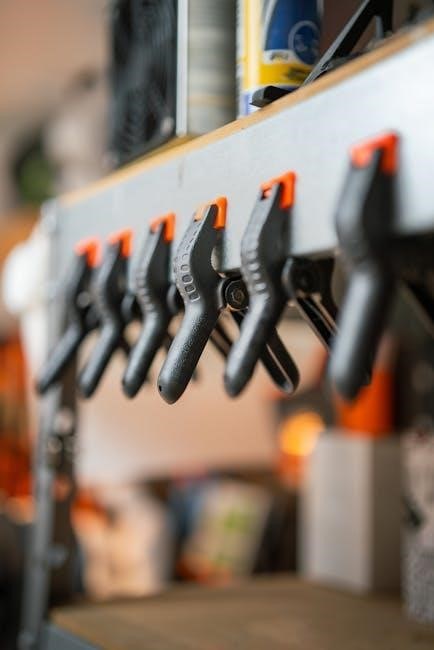
Consistent angle maintenance is paramount, just as reliable backups are for data protection. The guide’s side clamping mechanism provides exceptional stability, preventing unwanted movement. Remember to use appropriate honing stones – coarser grits for initial shaping, finer grits for polishing. Like Veritas appliances simplifying NetBackup, this guide simplifies edge work. Regularly check blade alignment and adjust as needed for optimal results, achieving razor-sharp edges on both chisel and plane iron blades.
Honing Curved Blades
Honing curved blades with the Veritas guide demands a nuanced approach, akin to managing complex data replication with NetBackup. The guide’s clamping mechanism, while robust, requires careful positioning to accommodate the blade’s curvature. Focus on maintaining even pressure across the entire bevel, preventing localized honing.
Employ short, controlled strokes, mirroring the precision needed for successful backups. Regularly assess the blade’s profile, ensuring uniform honing along the curve. Adjust the guide’s position incrementally to follow the blade’s contour. Like Veritas appliances simplifying deployment, this technique streamlines curved blade sharpening. Patience is key; avoid aggressive honing that could distort the blade’s geometry. Achieving a consistently sharp edge on curved blades requires diligence and a methodical approach.
Refining a Polished Edge
Refining a polished edge with the Veritas honing guide is akin to optimizing data duplication within NetBackup – a process of incremental improvement. After initial honing, utilize finer grit stones to eliminate microscopic imperfections. Employ very light pressure and extended strokes, focusing on removing the burr created during sharpening.
The guide’s stability is crucial here, mirroring the reliability of Veritas appliances. Regularly strop the blade on leather to further polish and align the edge. Inspect the edge under magnification to assess refinement progress. This stage isn’t about removing material, but about achieving a razor-sharp, flawless finish. Like securing legitimate users in data protection, precision is paramount for optimal cutting performance.

Troubleshooting Common Issues
Addressing blade slippage or angle inconsistencies mirrors NetBackup troubleshooting; verifying disk pools and client connections ensures optimal performance and reliable results.
Blade Slippage During Honing
Blade slippage within the Veritas honing guide, much like issues encountered with NetBackup client connections, often stems from inadequate clamping force or an improperly adjusted setup. Ensure the blade is fully seated against the guide’s reference surfaces before tightening the clamping mechanism. Verify the blade thickness adjustment accurately matches the steel’s dimensions; a loose fit invites movement during the honing stroke.
Inspect the clamping surfaces for debris or residue that might reduce friction. If slippage persists, consider lightly roughening the blade contact points with fine sandpaper to enhance grip. Remember, consistent pressure and a secure clamp are paramount, mirroring the importance of stable connections in data backup systems. Regularly check and tighten the clamping knob throughout the honing process.
Difficulty Achieving Desired Angle
Struggling to consistently reach the intended honing angle with the Veritas guide can resemble troubleshooting NetBackup status codes – requiring methodical investigation. First, confirm the guide’s angle indicator is accurately set to your target. Double-check that the blade is fully and squarely seated within the clamping mechanism; any misalignment throws off the angle.
Practice slow, deliberate honing strokes, focusing on maintaining a consistent angle throughout the entire length of the blade. Avoid applying excessive pressure, which can cause the blade to lift or shift. If problems persist, slightly loosen the clamping knob to allow for minor adjustments during the stroke, then re-tighten. Remember, precision is key, just as it is in data replication.
Maintaining the Honing Guide
Like ensuring optimal performance of NetBackup appliances, regular maintenance extends the life and accuracy of your Veritas honing guide. After each use, thoroughly clean the guide body and clamping mechanism to remove abrasive particles and metal filings. A soft brush and mild solvent work best.
Periodically inspect the clamping mechanism for wear or damage, particularly the clamping knob and contact surfaces. Lubricate moving parts with a light machine oil to ensure smooth operation. Store the guide in a dry environment to prevent corrosion. Replace worn parts promptly to maintain consistent honing results, mirroring the importance of disk pool health checks.

Comparison with Other Honing Guides
Veritas’s approach, like NetBackup’s data protection, balances features and cost; side clamping offers stability, contrasting with top clamping and other available guide designs.
Veritas vs. Other Side Clamping Guides
When evaluating side clamping honing guides, the Veritas model distinguishes itself through build quality and precision, mirroring Veritas NetBackup’s reliability in data management. Many competing guides utilize plastic components, potentially sacrificing long-term stability and accuracy. The Veritas guide, however, features robust metal construction, ensuring consistent clamping force and minimal flex during honing.
Furthermore, the Veritas design often incorporates finer adjustment mechanisms for blade thickness, allowing for more precise angle control – a critical factor for achieving a truly refined edge. While other guides may offer similar functionality, the Veritas implementation tends to be smoother and more intuitive. Like NetBackup’s optimized duplication, the guide’s design focuses on efficient and reliable performance. Consider the long-term value and precision when comparing options.
Veritas vs. Top Clamping Guides
Comparing the Veritas side clamping honing guide to top clamping designs reveals fundamental differences in stability and control. Top clamping guides, while simpler in concept, can sometimes exhibit blade lift or movement during the honing process, especially with thinner or more flexible blades. The Veritas side clamping mechanism provides superior blade security, minimizing this risk and ensuring consistent contact with the honing stone.
This stability is akin to the secure data handling of Veritas NetBackup, prioritizing integrity. Side clamping also allows for better visibility of the honing process, enabling users to more accurately assess their progress. While top clamping guides may be more affordable, the Veritas guide’s enhanced control and precision often justify the investment for serious tool maintenance enthusiasts;
Cost-Benefit Analysis
The Veritas side clamping honing guide represents a moderate investment compared to basic honing solutions or some competing guides. However, evaluating the long-term benefits reveals significant value. The guide’s precision and stability minimize the risk of damaging expensive blades, reducing replacement costs – similar to how Veritas NetBackup protects valuable data.
Its robust construction ensures durability, promising years of reliable service. While cheaper alternatives exist, they often lack the features necessary for consistently achieving professional-quality edges. Considering the time saved, the improved honing results, and the extended lifespan of your tools, the Veritas guide offers a compelling return on investment for both hobbyists and professionals.

Maintenance and Care
Veritas appliances require verification of disk pools, like NetBackup, ensuring optimal performance; regular cleaning and part replacement maintain the honing guide’s precision.
Cleaning the Honing Guide
Maintaining the Veritas honing guide’s precision necessitates regular cleaning to remove abrasive particles and metal filings accumulated during use. After each honing session, thoroughly wipe down the guide body and clamping mechanism with a clean, dry cloth. For stubborn residue, a mild solvent like isopropyl alcohol can be applied sparingly to the cloth – avoid direct application to the guide.
Pay particular attention to the honing rod holders, ensuring they are free from debris that could affect blade alignment. Inspect the clamping surfaces for any buildup and gently remove it. Regularly check and clean the adjustment screws, ensuring smooth operation. Proper cleaning not only extends the guide’s lifespan but also guarantees consistent honing results, mirroring the reliability of Veritas’s NetBackup solutions in data protection.
Storing the Honing Guide
Proper storage is vital for preserving the Veritas honing guide’s accuracy and preventing damage. After cleaning, store the guide in a dry environment, shielded from dust and extreme temperatures. A dedicated case or drawer is ideal, preventing accidental impacts that could misalign components.
Avoid storing the guide alongside abrasive materials or tools that might scratch its surface. Consider applying a light coat of oil to the adjustment screws and clamping mechanism to prevent corrosion, similar to maintaining Veritas’s NetBackup appliances. Ensure the honing rod holders are securely fastened during storage to avoid loosening. Careful storage ensures the guide remains a reliable tool, ready for precise honing whenever needed.
Replacing Worn Parts
Over time, components of the Veritas honing guide may wear, impacting performance. Regularly inspect the clamping mechanism, honing rod holders, and adjustment screws for signs of damage or looseness. Veritas, like with their NetBackup solutions, prioritizes component availability. Replacement parts can typically be sourced directly from Veritas or authorized dealers.
Replacing worn parts is crucial for maintaining honing accuracy. Carefully disassemble the affected area, referencing the guide’s documentation. Ensure new parts are correctly installed and tightened to the specified torque. Prioritize genuine Veritas replacements to guarantee compatibility and performance. Proactive part replacement, similar to maintaining data protection infrastructure, extends the guide’s lifespan and ensures consistent results.