




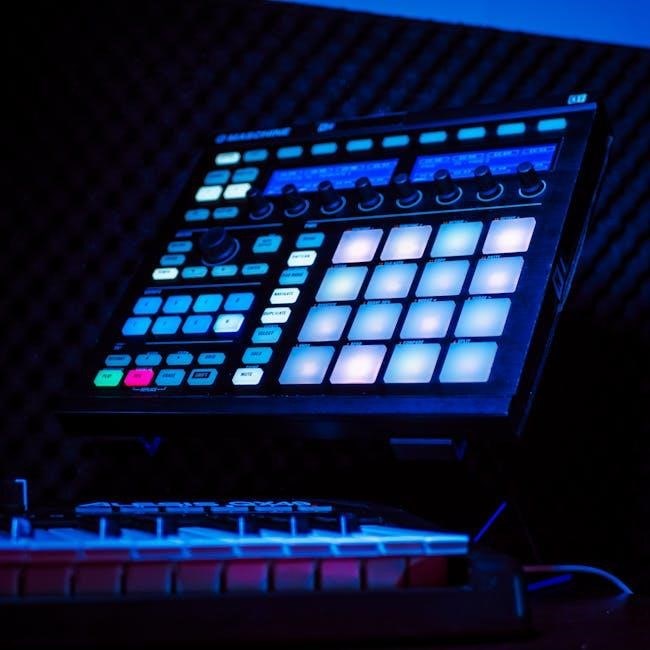
Maschine Plus is a groovebox merging beat-making, sampling, and DAW features for rapid, intuitive music creation and performance.
It boasts powerful drum synths, premium sounds, and an integrated sampler, offering a cutting-edge workflow for musicians.
This standalone system, enhanced by the 2.4 update and NKS integration, is ideal for producers seeking streamlined, creative control.
1.1 What is Maschine Plus?
Maschine Plus represents a significant evolution in Native Instruments’ renowned groove production system. It’s a standalone hardware system, meaning it doesn’t require a computer to operate, offering a completely self-contained music creation experience. However, it seamlessly integrates with computer-based workflows as well.
At its core, Maschine Plus is a hybrid instrument, blending the immediacy of a classic groovebox with the depth and flexibility of a modern Digital Audio Workstation (DAW). It allows musicians to effortlessly produce beats, melodies, and harmonies using powerful drum synths, a vast library of premium sounds, and a fully integrated sampler.
The system is designed for both studio production and live performance, providing a tactile and intuitive interface for composing, arranging, and performing music. The recent 2.4 update further enhances its capabilities, particularly through closer integration with third-party plug-ins via the Native Kontrol Standard (NKS).
1.2 Key Features and Capabilities
Maschine Plus boasts a comprehensive suite of features designed to empower music creators. Core to its functionality is the powerful drum synth engine, offering a diverse palette of sounds and extensive parameter control. The integrated sampler allows for importing and manipulating samples with ease, expanding sonic possibilities.
The system excels in sequencing, enabling the creation of intricate patterns and full arrangements. Standalone operation is a key feature, eliminating the need for a computer, while seamless DAW integration provides flexibility. The 2.4 update unlocks enhanced third-party plug-in compatibility through Native Kontrol Standard (NKS).
Furthermore, Maschine Plus offers a tactile workflow with responsive pads, knobs, and displays, facilitating intuitive control. It’s a complete production environment, combining hardware and software for a streamlined creative process.
1.3 Target Audience: Who is it for?
Maschine Plus is designed for a broad spectrum of music producers, from seasoned professionals to aspiring beatmakers. It particularly appeals to those who value a hands-on, intuitive workflow and seek a standalone production solution. Electronic music producers, hip-hop artists, and sound designers will find its capabilities exceptionally well-suited to their needs.
The system’s versatility also makes it attractive to live performers, offering a robust platform for improvisational sets and dynamic arrangements. Musicians who desire a blend of groovebox immediacy and DAW-like depth will appreciate its hybrid nature.
Ultimately, Maschine Plus is for anyone who wants to create music quickly, creatively, and without being tethered to a computer, benefiting from NKS integration and a streamlined experience.

Unboxing and Initial Setup
Carefully unpack Maschine Plus, verifying all components are present. Connect the hardware, install the software, and activate it with an internet connection.
Ensure OpenGL 2.1 support for seamless activation and operation.
2.1 Package Contents Checklist
Upon opening your Maschine Plus package, carefully verify the inclusion of all listed items to ensure a complete setup. The primary component, of course, is the Maschine Plus unit itself – the standalone groovebox. You should also find a power adapter specifically designed for the Maschine Plus, ensuring stable operation.
A USB cable is included for connectivity to your computer, facilitating software installation and potential data transfer. Importantly, the package contains essential documentation, including a quick start guide to get you up and running swiftly, and a more comprehensive user manual detailing all features and functionalities.
Additionally, check for a license serial number card, crucial for software activation. Finally, you may find promotional materials or information regarding additional Native Instruments products and services. Retain all packaging and documentation for potential warranty claims or future reference.
2.2 Connecting Hardware Components
Establishing connections for your Maschine Plus is straightforward. Begin by connecting the provided power adapter to the unit and a suitable power outlet, ensuring a secure fit. Next, utilize the included USB cable to link the Maschine Plus to your computer. This connection is vital for initial software installation, activation, and potential file transfers.
For audio output, connect your preferred headphones or studio monitors to the audio outputs on the rear panel. Consider using balanced cables for optimal audio quality and reduced noise. If integrating with external MIDI devices, utilize the MIDI in/out ports for seamless synchronization and control.
Ensure all cables are firmly seated to prevent signal loss or interruptions. Remember, the Maschine Plus functions as a standalone unit, minimizing the necessity for constant computer connection after initial setup.
2.3 Software Installation and Activation
Installing and activating the Maschine Plus software requires an active internet connection and a computer meeting the specified system requirements. Download the latest software version from the Native Instruments website after registering your product. Run the installer and follow the on-screen prompts, carefully selecting your desired installation path.
Upon completion, launch the Native Access application. This is your central hub for managing Native Instruments products. Locate Maschine Plus within Native Access and initiate the activation process. You’ll be prompted to log in to your Native Instruments account.
The software will verify your license and activate Maschine Plus. A graphics card supporting OpenGL 2.1 or higher is essential for a smooth installation. Once activated, you can access all included sounds, instruments, and effects.

Understanding the Maschine Plus Interface
Maschine Plus features a streamlined hardware layout with responsive pads, intuitive knobs, and clear displays for seamless navigation.
The software interface mirrors this, offering a visual workflow for composing, arranging, and performing music effortlessly.
Mastering basic navigation unlocks its full potential.
3.1 Hardware Layout: Knobs, Pads, and Displays
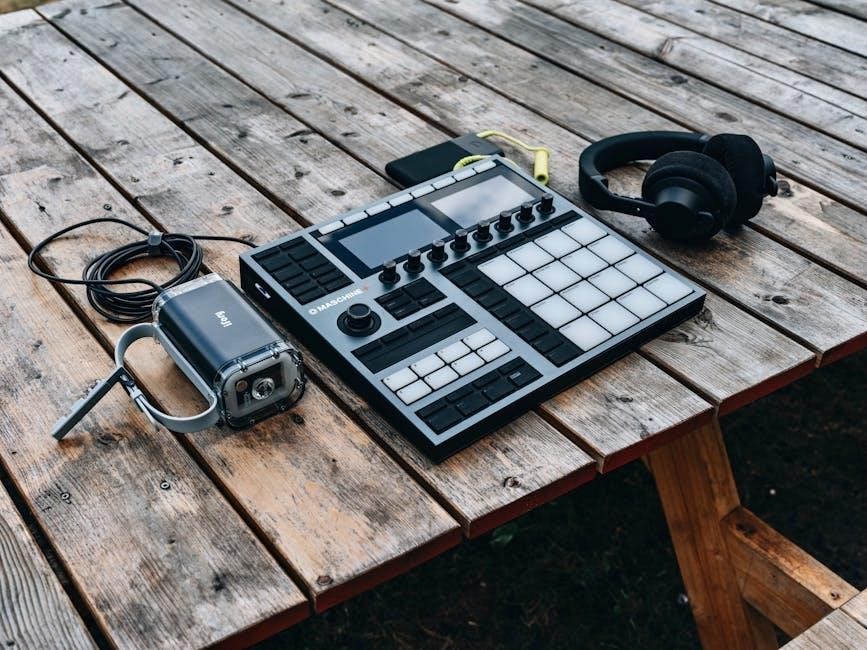
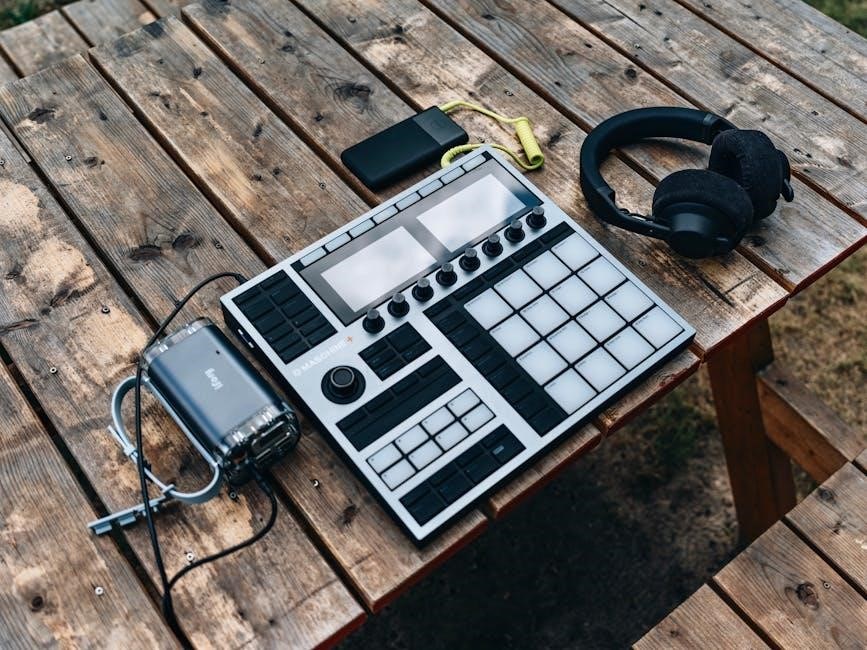
Maschine Plus’s hardware is meticulously designed for tactile control and immediate feedback. The responsive pads are central to performance, enabling finger drumming, sample triggering, and step sequencing with exceptional sensitivity.
Surrounding the pads are an array of knobs, providing precise control over parameters like volume, filter cutoff, and effects sends. These knobs are intelligently mapped, adapting to the selected function within the software.
High-resolution displays offer a clear visual representation of the software interface, showing waveforms, patterns, and settings. These displays are crucial for navigating menus, editing sounds, and monitoring levels. The intuitive layout ensures that essential controls are always within reach, fostering a fluid and creative workflow. The hardware’s build quality is robust, designed for both studio and stage use.
3.2 Software Interface Overview
Maschine Plus’s software interface is structured around a central browser, providing access to sounds, samples, plugins, and projects. The main sections include the Arrangement view for song structure, the Pattern view for detailed sequencing, and the Mixer for audio processing.
The Sampler section allows for deep sample manipulation, while the Drum Synth Engine offers a wide range of percussive sounds. The interface is designed to mirror the hardware layout, ensuring a seamless connection between physical controls and on-screen parameters.
NKS integration expands the software’s capabilities, allowing control of third-party plugins directly from the Maschine interface. Visual feedback is clear and concise, aiding in intuitive editing and arrangement. The software’s workflow is optimized for both beginners and experienced producers.
3.3 Navigation and Workflow Basics
Maschine Plus navigation relies heavily on the hardware’s intuitive layout. Use the rotary encoders to adjust parameters and the pads for triggering sounds and entering steps. The displays provide crucial visual feedback, showing parameter values and waveform information.
Workflow centers around creating patterns in the Pattern view, then arranging these patterns into a song in the Arrangement view. Sampling is streamlined through drag-and-drop functionality and dedicated sampling modes. Utilize the browser to quickly locate sounds and plugins.
Mastering the shift button unlocks secondary functions on the hardware controls, expanding the range of possibilities. Experiment with the various modes and shortcuts to accelerate your production process. The integrated help system provides guidance and tutorials.

Core Functionality: Beatmaking
Maschine Plus excels at beatmaking with its powerful drum synth engine, premium sounds, and intuitive sequencing capabilities, allowing effortless creation of rhythms and grooves.
4.1 Drum Synth Engine: Sounds and Parameters
Maschine Plus’s drum synth engine is a cornerstone of its beatmaking prowess, offering a diverse palette of sounds and extensive parameter control. Users can sculpt everything from classic 808s and 909s to entirely original percussive textures.
The engine features a range of synthesis methods, including subtractive, FM, and wavetable, providing flexibility in sound design. Key parameters like pitch, decay, filter cutoff, and resonance are readily accessible, allowing for real-time manipulation and nuanced adjustments.
Beyond basic parameters, the engine includes advanced modulation options, such as LFOs and envelopes, to create dynamic and evolving sounds. Pre-designed presets offer a starting point for exploration, while the ability to save custom creations encourages experimentation and personalized soundscapes. The intuitive interface facilitates both simple tweaks and complex sonic sculpting, making it accessible to both beginners and experienced sound designers;

4.2 Sampling: Importing and Manipulating Samples
Maschine Plus excels in sampling, allowing users to import audio files directly into the system for creative manipulation. Supported formats include WAV, AIFF, and MP3, providing broad compatibility. Samples can be dragged and dropped from a computer or loaded from external storage devices.
Once imported, samples become building blocks for beatmaking and melodic creation. Maschine Plus offers a comprehensive suite of editing tools, including trimming, looping, time-stretching, and pitch-shifting. These tools enable precise control over sample playback and allow for the creation of unique textures and rhythms.
Furthermore, the integrated sampler features powerful modulation capabilities, allowing users to apply effects and automation to samples in real-time. Keygroup editing facilitates the organization and layering of samples, while the intuitive interface streamlines the sampling workflow, making it accessible to all skill levels.
4.3 Sequencing: Creating Patterns and Arrangements

Maschine Plus’s sequencing capabilities are central to its workflow, enabling users to construct intricate patterns and full arrangements with ease. The 16-pad grid serves as a visual and tactile interface for step sequencing, allowing for intuitive drum programming and melodic composition.
Patterns are built by assigning sounds to pads and programming rhythmic variations. Maschine Plus supports various sequence lengths and time signatures, offering flexibility in creating diverse musical structures. Users can record live input, quantize notes for precision, and utilize swing and shuffle controls to add groove.
Arrangements are assembled by chaining patterns together in the arranger window, allowing for the creation of complete song structures. Scenes can be created to store and recall different arrangement variations, facilitating experimentation and live performance.
Advanced Features and Techniques
Maschine Plus unlocks deeper creative potential through NKS integration, third-party plug-in compatibility, and a powerful, versatile integrated sampler for expansive sound design.
5.1 Native Kontrol Standard (NKS) Integration
Native Kontrol Standard (NKS) dramatically expands Maschine Plus’s capabilities by seamlessly integrating third-party plug-ins. This integration allows users to access and control a vast library of instruments and effects directly from the Maschine Plus hardware.
NKS-compatible plug-ins appear within the Maschine browser, offering consistent tagging and pre-mapped controls for intuitive manipulation. This means you can leverage your existing plug-in collection with the tactile, hands-on workflow of Maschine Plus.
The 2.4 update specifically focused on enhancing this integration, providing a closer connection between Maschine and NKS-certified instruments. Benefits include streamlined browsing, pre-defined sound variations, and deep parameter control, all accessible directly from the Maschine Plus interface, boosting creative speed and workflow efficiency.
5.2 Using Third-Party Plug-ins
Maschine Plus isn’t limited to Native Instruments’ sounds; it readily incorporates third-party plug-ins, expanding its sonic palette immensely. While NKS integration offers a streamlined experience, Maschine Plus also supports VST and AU plug-ins without NKS certification.
To utilize these, you’ll need to scan your plug-in folders within the Maschine software. Once scanned, they appear in the browser, allowing you to load them into tracks. However, uncertified plug-ins may require manual mapping of controls for optimal integration.
This flexibility allows producers to leverage their favorite synths, effects, and utilities within the Maschine Plus workflow, creating unique and personalized soundscapes. Experimentation is key to unlocking the full potential of combining Maschine’s features with external tools.
5.3 Utilizing the Integrated Sampler
Maschine Plus’s integrated sampler is a powerful tool for manipulating audio, forming the core of many productions. You can import samples directly via SD card or USB, or even resample audio from within Maschine itself, fostering creative loops and textures.
The sampler allows for extensive editing, including time-stretching, pitch-shifting, filtering, and looping. Keygroup editing enables complex sample arrangements and multi-sampling for realistic instrument creation. Maschine’s intuitive interface simplifies these processes.
Furthermore, the sampler integrates seamlessly with Maschine’s sequencing and performance features, allowing for dynamic sample manipulation during live sets or studio sessions. Explore slicing, chopping, and layering to unlock unique sonic possibilities.

Maintenance and Troubleshooting
Maschine Plus requires regular cleaning and care to ensure optimal performance. Addressing common issues promptly, and keeping firmware updated, will maintain functionality.
Refer to the manual for detailed instructions on cleaning, troubleshooting, and installing the latest software updates for a seamless experience.
6.1 Cleaning and Care Instructions
Maintaining your Maschine Plus involves regular cleaning to prevent dust and debris buildup, which can affect performance and longevity. Always power off and disconnect the unit before cleaning. Use a soft, dry, lint-free cloth to wipe down the exterior surfaces, including the pads, knobs, and displays.
Avoid using liquid cleaners or abrasive materials, as these can damage the finish or internal components. For stubborn dirt on the pads, lightly dampen the cloth with distilled water, ensuring it’s not dripping wet. Gently wipe the pads, then immediately dry them with a separate, dry cloth.
Periodically clean the display screen with a microfiber cloth designed for electronics. Do not apply excessive pressure. Store the Maschine Plus in a clean, dry environment when not in use, away from direct sunlight and extreme temperatures. Proper care will ensure years of reliable operation.
6.2 Common Issues and Solutions
Encountering issues with your Maschine Plus? Here are some common problems and solutions; If the unit doesn’t power on, check the power adapter and cable connections. For software glitches, try restarting the Maschine Plus. If pads become unresponsive, clean them as described in the care instructions.
Connectivity problems can often be resolved by ensuring the USB cable is securely connected or by reinstalling the software. Audio distortion might indicate incorrect audio settings; verify your output routing. If you experience freezing or crashes, ensure your system meets the minimum requirements.
For persistent issues, consult the Native Instruments support website for FAQs, troubleshooting guides, and potential firmware updates. Regularly checking for updates can resolve known bugs and improve stability. If problems persist, contact Native Instruments customer support for assistance.
6.3 Firmware Updates and Installation
Keeping your Maschine Plus updated is crucial for optimal performance and access to new features. Firmware updates are typically released through the Native Instruments software. An internet connection is required to download and install these updates.
To initiate an update, connect your Maschine Plus to your computer and launch Native Access. The software will automatically check for available updates. Follow the on-screen instructions carefully during the installation process – do not interrupt the update.
Ensure a stable power supply throughout the update to prevent potential issues. After installation, the Maschine Plus may restart. Regularly checking for updates ensures you have the latest bug fixes and improvements. Refer to the Native Instruments support website for detailed instructions and troubleshooting tips if needed.
Safety Precautions
Always follow electrical safety guidelines when operating Maschine Plus, ensuring proper grounding and avoiding damp environments.
Protect the hardware from damage, and operate within recommended temperature ranges for longevity.
7.1 Electrical Safety Guidelines
Prioritize electrical safety when using your Maschine Plus. Always connect the device to a properly grounded outlet that matches the voltage specified on the unit’s power adapter.
Never operate the Maschine Plus with a damaged power cord or plug; replace them immediately.
Avoid using extension cords or power strips unless absolutely necessary, and ensure they are adequately rated for the device’s power consumption.
Do not expose the Maschine Plus or its power adapter to moisture or liquids, as this could create an electrical hazard.
Disconnect the power adapter from the outlet during lightning storms or if the device will be unused for an extended period.
Internal components should only be serviced by qualified personnel; attempting self-repair could result in electric shock or damage to the unit.
Regularly inspect the power cord for wear and tear.
7.2 Operating Environment Considerations
Ensure optimal performance and longevity of your Maschine Plus by considering the operating environment. Operate the device in a well-ventilated area, avoiding direct sunlight and extreme temperatures.
Keep the Maschine Plus away from dust, dirt, and excessive vibrations, which can damage internal components.
Avoid placing the unit near heat sources like radiators or stoves.
Do not use the Maschine Plus in humid environments or areas with high moisture levels.
A stable, level surface is crucial to prevent accidental falls or damage.
Protect the device from potential spills of liquids.
Regularly clean the exterior with a soft, dry cloth. Avoid using abrasive cleaners or solvents.
Proper environmental control contributes to reliable operation and extends the lifespan of your Maschine Plus.
7.3 Avoiding Damage to the Hardware
Protect your investment by taking precautions to avoid hardware damage. Never attempt to disassemble or repair the Maschine Plus yourself; this voids the warranty.
Handle the unit with care, avoiding drops, impacts, and excessive force on the knobs, pads, and displays.
Do not expose the Maschine Plus to extreme temperatures or humidity.
Avoid inserting foreign objects into any ports or openings.
Use only the provided power adapter and cables.
Disconnect the power adapter during periods of prolonged inactivity.
Clean the device regularly with a soft, dry cloth.
Store the Maschine Plus in a safe, dry location when not in use. Proper handling and care will ensure years of reliable performance.
Technical Specifications
Maschine Plus requires an internet connection, OpenGL 2.1+ graphics card for installation, and activation.
It seamlessly blends cutting-edge software with robust hardware for a complete production experience.
8.1 System Requirements (Operating System, RAM, etc.)
Operating System: While Maschine Plus functions as a standalone device, utilizing its full potential with software updates and expansions necessitates compatibility with modern operating systems. Officially, Maschine Plus supports macOS 10.15 Catalina or newer, and Windows 10 (64-bit) version 1909 or newer. Ensure your system meets these minimum requirements for optimal performance.
RAM: A minimum of 8 GB of RAM is recommended, though 16 GB or more is strongly advised for handling larger projects, extensive sample libraries, and running multiple plug-ins concurrently. Insufficient RAM can lead to performance bottlenecks and system instability.
Processor: An Intel Core i5 or equivalent AMD processor is the baseline requirement. However, for demanding tasks, an Intel Core i7 or AMD Ryzen 7 processor will provide a smoother and more responsive experience.
Graphics Card: A graphics card supporting OpenGL 2.1 or higher is essential for software installation and activation. Dedicated graphics are preferable to integrated graphics for enhanced visual performance.
Hard Drive Space: At least 10 GB of free hard drive space is required for installation, with additional space needed for sound libraries and projects.
8.2 Hardware Specifications (Dimensions, Weight, etc.)
Dimensions: The Maschine Plus boasts a compact and portable design, measuring approximately 31.4 cm (12.36 inches) in width, 21.8 cm (8.58 inches) in depth, and 6.7 cm (2.64 inches) in height. These dimensions make it suitable for both studio and on-the-go production.
Weight: Weighing in at approximately 2.48 kg (5.47 lbs), the Maschine Plus strikes a balance between robustness and portability. Its solid build quality ensures durability during transport and performance.
Display: It features a high-resolution color display, providing clear visual feedback for parameter adjustments, sample browsing, and waveform visualization. The screen enhances workflow efficiency.
Pads: Sixteen velocity-sensitive, backlit pads offer responsive and expressive control for beatmaking, sampling, and performance.
Knobs & Encoders: Numerous rotary encoders and dedicated knobs provide tactile control over various parameters, facilitating precise adjustments and creative sound design.
8.3 Connectivity Options (USB, Audio Outputs, etc.)
USB: Maschine Plus offers USB connectivity for computer integration, enabling seamless data transfer, software updates, and control over compatible applications. It supports USB 2.0 for reliable communication.
Audio Outputs: Equipped with stereo ¼” TRS outputs, Maschine Plus delivers high-quality audio signal to studio monitors, headphones, or external audio interfaces. This ensures pristine sound reproduction.
Headphone Output: A dedicated ¼” TRS headphone output with adjustable volume control allows for private monitoring and cueing during performance or production sessions.
MIDI: Maschine Plus features MIDI In and Out ports, facilitating connection to external synthesizers, drum machines, and other MIDI-compatible devices for expanded creative possibilities.
SD Card Slot: An SD card slot enables storage expansion for samples, projects, and content, providing ample space for your musical creations and ensuring portability.